.svg)

If you open a psychology dictionary, you won't find the word "rest." After "sensation" usually comes "responsibility," and then "operator's refusal to perform a task."
For me, the connection between the absence of rest and that "refusal" is obvious: the person is simply exhausted, especially by responsibility.
We tend to call almost anything "rest" as long as we're not in our usual workspace. A watercolor workshop, sightseeing tour, party, or dinner with friends—we label them all as rest. But in all these activities, we keep working hard. Our nervous system stays busy processing everything happening around us.
Instead of unloading the mind, we unload (or overload) the body and lighten our wallets.
Tension has become our natural background. We live with it as if it's normal.
Meanwhile, pleasant laziness and genuine relaxation are often judged by others or by our inner critic. Even when there's truly nothing we have to do, we invent something anyway.
"To rest," you need to know how.
And "to truly rest," you need to learn how.
Think about it: how many books have you seen about beating procrastination, perfect planning, boosting productivity, or using your free time "wisely"?
And how many books teach you how to rest? Really rest?
Let Me Tell You a Story
About a century ago, the great Russian scientist and physiologist Ivan Petrovich Pavlov told his friends he'd discovered the principles of true rest.
Here they are:
1. No responsibility for another person during rest time
2. No competition with others
3. Presence of pleasure
If your situation meets all three conditions - congratulations. You're resting.
If even one is missing, you're working. Maybe internally, but still working.
Let's Look at a Few Examples
Any parent who's ever gone on vacation with a child knows how much energy it takes to stay alert, to care, to adapt to new environments, climates, menus, and a sweetheart's behavior, and how sharply both adults and children can react to all that change.
Those who travel with friends or partners know that even closeness requires effort. We invest energy in being together, planning shared activities, negotiating desires, or defending our own. We adjust, compromise, or push back. Even with the best match in interests and rhythm, real rest often demands something else: solitude.
Travel itself is a form of stress.
You can only rest once you've spent energy on finding your bearings, ensuring comfort and safety, and meeting your basic needs. By the time you finally relax... it was a time to go home.
A paintball match, a karting session, or a snowboarding weekend isn't rest either. These are fun activities, but they're about competition, reaction, survival, and stimulation. Your nervous system is mobilized, not resting.
Even things like dancing or social events can keep us subconsciously comparing ourselves to others, wanting to be more graceful, charming, or interesting. We're in tension, even if it feels pleasant.
That's why after such "rest," we often come home and collapse, body and mind still processing all that excitement.
By contrast, spending time in your garage tinkering with something you love, or drifting off during a gentle massage - that is rest. You're in your own rhythm, without responsibility or competition, doing something that brings quiet pleasure.
The Pleasure Principle
Pleasure is the hardest part to define because it's deeply personal.
To me, pleasure means the satisfaction of one's current needs, minus major tension and emotional overload. It's when things feel better than before, even for a moment.
Strong emotions, though, are not a rest. They are beautiful, but they are work.
Rest, in contrast, means peace. Or, if that sounds too old-fashioned - calm.
Yes, novelty brings pleasure and is essential for the mind. But curiosity and the hunger for new impressions are also work, they require orientation, choice, and adaptation.
That's why even slow walks through old city streets or hours in art galleries can leave us tired. The impressions are wonderful, but they're still effort.
Pavlov himself loved gardening. Physical work, yes, but within all three rules: no responsibility for others, no competition, and genuine pleasure.
The Formula for Real Rest
True rest doesn't mean doing nothing. That, after all, would mean being dead.
To rest means to apply the minimum of physical and emotional effort, to seek as few impressions as possible, and to allow yourself to be in a pleasant, safe environment where no one needs anything from you—and you don't owe anyone a thing.
For example:
Your favorite retreat in beautiful Kelowna, British Columbia.
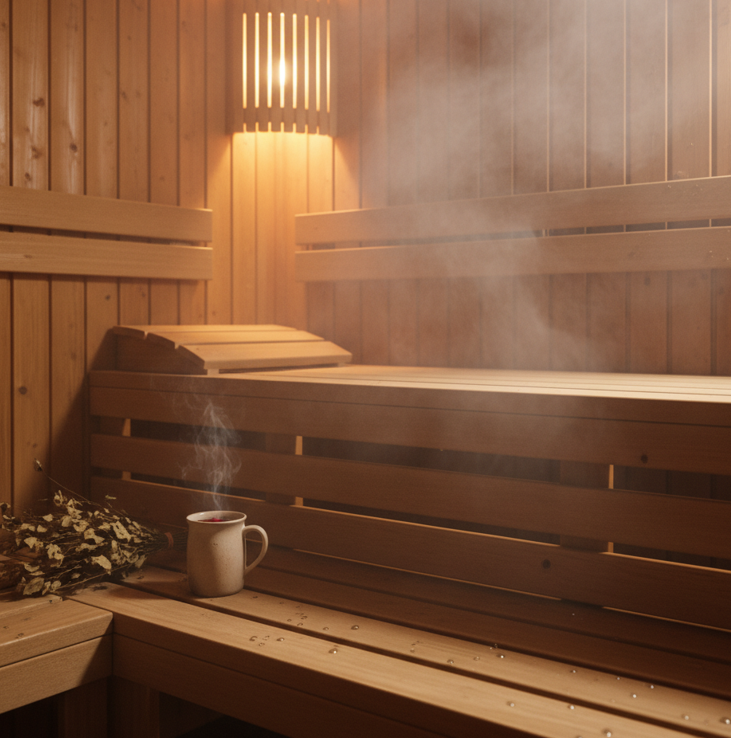
Lying down on a warm bench inside a sauna.
Sitting quietly and sipping herbal tea.
That's real rest.
And If You've Ever Joined One of My Retreats
You already know: they're designed exactly for this kind of rest, without responsibility, without competition, and filled with quiet pleasure.
Because true rest is not about doing nothing.
It's about finally having the rest you deserve and learning to re-treat yourself.
And one more thing: do it regularly. Every week. Then you'll maintain your system in good working order, not just survive until the next vacation.